

Tuna Day: Tuna & Ceviche Guide for Toronto & the GTA
- ThinkOFood .com
- Apr 28
- 7 min read

Best Ways to Serve Tuna in Toronto & the GTA
In Toronto & the GTA, tuna is at its best when it’s purchased from a reputable fishmonger, kept properly chilled, and served in preparations that respect freshness—especially ceviche peruano and lightly seared tuna for events.
What to Know Before Serving Tuna
Tuna quality is about handling as much as species: cold chain + clean prep matter most.
“Sushi-grade” is a market term; ask about sourcing, freezing, and handling instead.
For ceviche peruano, the goal is firm, fresh fish and a balanced leche de tigre, not long marination.
Yellowfin and albacore are common for events; bluefin is premium but not always necessary.
Tuna is versatile for dinner parties: crudo, tartare, ceviche, tataki, or seared steaks.
Food safety is non-negotiable: keep tuna cold, prep fast, and serve promptly.
A private chef can build a tuna-forward menu that fits allergies, preferences, and the flow of your event.
Tuna
Tuna is one of the most event-friendly premium proteins: it can be served raw, cured, citrus-“cooked,” or quickly seared, and it pairs naturally with bright acids, herbs, and spices. For hosts in Toronto & the GTA, Tuna Day is a smart theme because it feels luxurious without being heavy, and it scales from an intimate dinner party to a corporate gathering.
The key is treating tuna like what it is: a delicate ingredient that rewards precision. Great tuna dishes aren’t complicated; they’re disciplined. That means choosing the right cut, keeping it cold, and building flavours that highlight the fish instead of burying it.
What “great tuna” actually means
When people say “good tuna,” they often mean colour. But colour can be misleading. What matters more is:
Fresh smell: clean and ocean-like, never “fishy.”
Firm texture: the flesh should spring back, not feel mushy.
Moisture level: it should look hydrated, not dry or slimy.
Handling: ask how it was stored and how long it has been in the case.
Species and flavour: what you’ll notice on the plate
Different tuna species behave differently in raw and cooked preparations:
Yellowfin (ahi): clean, mild, and versatile excellent for searing and for many raw-style dishes.
Albacore: lighter colour, softer flavour; works well for crudo-style plates and gentle marinades.
Bigeye: richer and often more buttery; great for sashimi-style presentations.
Bluefin: premium, high-fat cuts can be exceptional, but it’s not required for a memorable menu.
For most private events, the “best” tuna is the one that is handled correctly and matched to the dish.
The truth about “sushi-grade”
“Sushi-grade” is not a regulated label. It’s a marketing term that varies by seller. If you’re planning to serve tuna raw or in ceviche peruano, ask practical questions:
Was the fish previously frozen? If yes, at what temperature and for how long?
How is it transported and stored?
Is it intended for raw consumption?
A reputable fishmonger will answer clearly.
Tuna cuts: choosing the right one for your menu
Tuna isn’t one uniform ingredient. The cut changes the texture, richness, and best cooking method.
Loin (center-cut)
Best for: seared steaks, tataki, clean cubes for ceviche peruano.
Why: consistent shape and texture; easy to portion.
Belly (fattier sections)
Best for: crudo and sashimi-style plates.
Why: richer mouthfeel; pairs well with citrus and subtle seasoning.
Trim (small pieces)
Best for: tartare, spicy tuna, croquettes (cooked).
Why: cost-effective and ideal when the fish will be chopped.
For catering, portion control matters. A private chef will plan tuna portions based on the event style: passed bites, plated courses, or family-style sharing.
Tuna Ceviche Perúano: What makes it different
Ceviche peruano is not just “fish in lime juice.” It’s a specific balance of freshness, acid, heat, and aromatics built around leche de tigre, the citrus-based marinade that becomes its own sauce.
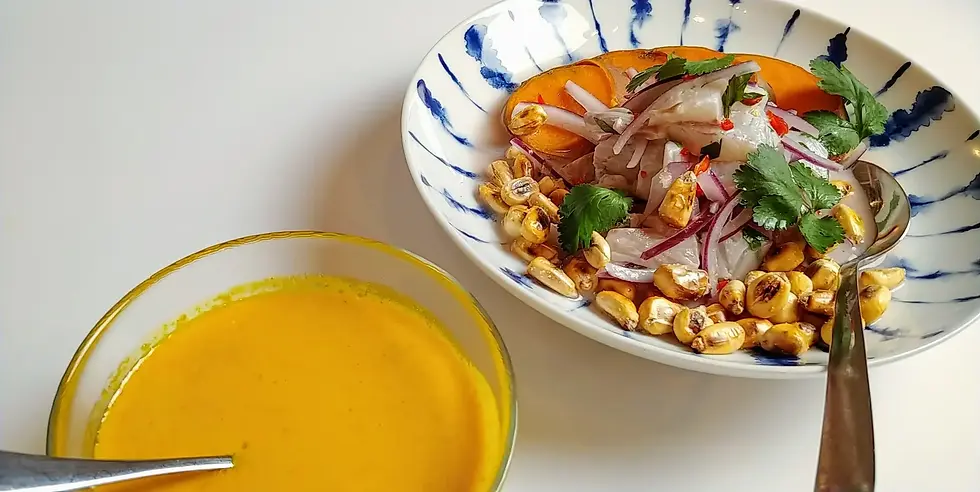
What sets ceviche peruano apart:
Short marination: the fish should stay tender and clean, not chalky.
Bright, layered acidity: usually lime, sometimes balanced with other citrus.
Heat with purpose: typically ají (or a clean chilli alternative).
Aromatic base: onion, cilantro, and sometimes a hint of garlic or ginger depending on the chef’s style.
Timing: the most common mistake
If tuna sits too long in acid, it can turn firm and dry. For tuna ceviche, the goal is often a brief cure enough to season and lightly change the surface, while keeping the center silky.
Texture matters: dice size and cut direction
For ceviche peruano, tuna is usually cut into even cubes so every bite marinates consistently. Uneven pieces lead to uneven “cooking,” which reads as sloppy on the palate.
What to serve with Tuna ceviche peruano
Traditional sides vary, but for events in Toronto & the GTA, the best approach is to keep it crisp and clean:
Thinly sliced sweet potato (roasted or steamed)
Corn or corn nuts for crunch
Plantain chips
Cucumber or avocado for a softer counterpoint
For dinner parties, ceviche peruano is a strong first course because it wakes up the table.
Food safety for tuna at home events
Serving tuna at a private event is absolutely doable, but it requires professional-level discipline.
Keep tuna cold (the “cold chain” rule)
Tuna should stay cold from purchase to prep to service. Practical guidelines:
Transport in a cooler with ice packs.
Refrigerate immediately.
Prep close to service time.
Serve on chilled plates or over ice when appropriate.
Separate tools and clean surfaces
Raw fish demands strict separation:
Dedicated cutting board and knife
Clean towels (or disposable paper)
Frequent handwashing
Know your guests
For some guests, pregnant individuals, immunocompromised guests, or very young children, raw preparations may not be the right choice. A good menu offers options: seared tuna, cooked seafood, or vegetarian starters.
How to build a “Tuna Day” menu that feels premium
A tuna-themed menu works best when it has contrast: temperatures, textures, and flavour profiles.
A simple premium structure (starter → main → finish)
Starter: ceviche peruano (tuna) or tuna crudo with citrus and herbs
Main: sesame-crusted seared tuna with seasonal vegetables, or a Mediterranean-inspired tuna plate
Optional bite: tuna tartare cones or mini tostadas for a cocktail-style opening
Flavour pairings that make tuna taste expensive
Tuna shines with ingredients that add brightness and depth without overpowering:
Citrus (lime, lemon, yuzu-style blends)
Fresh herbs (cilantro, chives, dill)
Clean heat (chilli, pepper, aji-style sauces)
Umami accents (soy, miso, seaweed, capers)
Crunch (sesame, toasted nuts, crisp vegetables)
Dietary accommodations without compromising the dish
A premium menu should feel inclusive. With the right planning, tuna dishes can be adapted for:
Gluten-free: use tamari instead of soy sauce; avoid cross-contact.
Dairy-free: most tuna preparations are naturally dairy-free.
Low-carb: focus on vegetables, salads, and clean sauces.
No-raw preference: offer seared options or cooked seafood alternatives.
When to serve tuna
Tuna is ideal when:
You want a lighter, modern menu.
You’re hosting a dinner party, anniversary, or corporate gathering with a “wow” first course.
You want food that photographs well and feels restaurant-quality.
You might skip tuna when:
Guests strongly prefer fully cooked proteins.
The event environment can’t support safe cold holding (very limited fridge space, long outdoor exposure without cooling).
Private chef and catering in Toronto & the GTA: where ThinkOFood fits naturally
If you love the idea of Tuna Day but don’t want the stress of sourcing, timing, and food safety, this is where a professional team matters.
ThinkOFood provides catering and private chef services in Toronto & the GTA with a full-service approach: menu planning → ingredient sourcing → setup → cooking → service → cleanup. Tuna-forward menus work especially well with ThinkOFood’s globally inspired style—Mediterranean, Middle Eastern, and South American influences—because those cuisines naturally balance acid, herbs, and spice.
What a chef-led tuna menu changes for the host
Better timing: ceviche peruano and seared tuna are served at their peak.
Cleaner execution: consistent knife work, seasoning, and plating.
Less risk: professional handling and a plan for safe service.
More flow: guests enjoy the moment while the kitchen stays under control.
Event types that pair well with tuna menus
Dinner parties and birthdays
Anniversaries and holidays
Corporate gatherings and client dinners
Cocktail-style receptions with passed bites
Practical hosting checklist for Tuna Day
If you’re planning tuna at home, use this as a quick reality check:
Confirm fridge space and serving platters.
Plan a cold surface for raw items (or ice trays).
Keep ceviche peruano marination short and intentional.
Build a menu with one “safe” fully cooked alternative.
Decide the service style (plated vs. family-style vs. passed bites).
A great Tuna Day isn’t about complexity; it’s about control.
[FAQ]
Is tuna safe to eat raw? It can be, if it’s sourced and handled specifically for raw consumption and kept properly chilled. Ask your fishmonger about handling and freezing practices.
What is ceviche peruano?
Ceviche peruano is a Peruvian-style ceviche built around leche de tigre citrus, aromatics, and chilli designed for short marination and bright, clean flavour.
Does lime juice “cook” tuna in ceviche? Acid changes the proteins on the surface, which firms the fish and changes colour, but it doesn’t cook it the same way heat does. Food safety still depends on sourcing and handling.
How long should tuna sit in ceviche peruano? Often just a few minutes, depending on cube size and the acidity of the marinade. Too long can make tuna firm and dry.
What tuna is best for ceviche peruano? A firm, clean-tasting cut like center-cut loin is usually best because it portions evenly and holds texture.
What’s the difference between yellowfin and bluefin tuna? Yellowfin is leaner and very versatile; bluefin can be richer and fattier, especially in premium cuts. Both can be excellent when handled well.
What should I serve with tuna ceviche? Crisp sides like plantain chips, corn nuts, cucumber, or sweet potato balance the acidity and add texture.
Can ThinkOFood serve a tuna-focused menu for a dinner party in Toronto & the GTA? Yes, ThinkOFood can design a tuna-forward menu (including ceviche peruano-style courses) tailored to your guests, dietary needs, and service style.
Do you offer fully cooked alternatives for guests who avoid raw fish? Yes, menus can include seared tuna, cooked seafood, or non-seafood options so everyone is comfortable.
Meet ThinkOFood
ThinkOFood is a Toronto-based private chef and catering service led by Chef Andrey Kravchenko, a Red Seal–certified chef with 15+ years of hospitality experience and international culinary training.
ThinkOFood is known for custom menus, a full-service approach (setup to service to cleanup), and thoughtful dietary accommodations backed by 100+ 5-star reviews on Google.
This Guide It’s written from a chef’s perspective, based on professional kitchen standards, event execution experience, and real-world tuna service considerations.
If you’re planning a dinner party, birthday, anniversary, holiday, or corporate gathering in Toronto & the GTA, reach out to ThinkOFood to build a Tuna Day menu that’s fresh, safe, and restaurant-quality without you managing the timing.


